As a dedicated adventurer who has sunk countless hours into Sanctuary since the early seasons, I’ve watched Diablo 4 evolve dramatically. By 2026, the dust has long settled on the Vessel of Hatred expansion, but the conversations it ignited about class design still resonate. When I first stepped into the jungles of Nahantu back in late 2024, the Spiritborn instantly captivated me—a whirlwind of martial prowess and ancestral guidance. Yet, the more I played, the more I couldn’t shake the comparisons to my old main, the Druid. Today, I want to walk you through why this comparison still matters, how it reshaped both classes in unexpected ways, and what it taught me about Blizzard’s evolving approach to character fantasy.
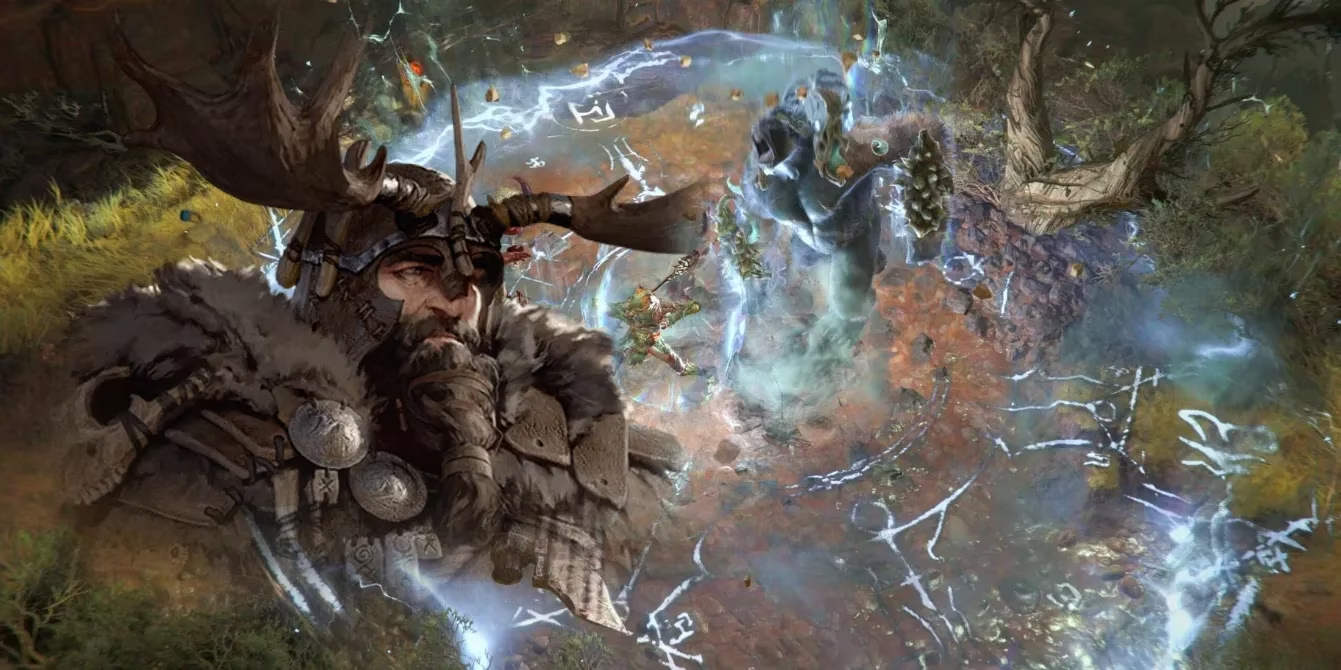
The first thing that struck me was the surface-level similarity: both classes channel animal spirits to define their combat roles. The Spiritborn’s Spirit Hall mechanic lets you choose a primary and secondary guardian—Jaguar, Gorilla, Eagle, or Centipede—each infusing your skills with unique effects like ferocity for multi-attacks, resolve and barriers, evade-based mobility, or poison DoTs. In contrast, the Druid’s Spirit Boons are a set of passive upgrades unlocked through offerings. The difference is night and day when you dig in. I recall building a gorilla-centered Spiritborn that could tank as well as any bear-form Druid while still darting around the battlefield with eagle-infused evades. That hybrid fluidity is something the Druid simply couldn’t match in the 2.0 era. The Spiritborn’s synergy between active skill selection and spirit attunement created a vast web of viable builds, whereas the Druid often felt locked into rigid combinations—earth and werebear, or storm and werewolf—with little room for creative fusion.
Another glaring contrast surfaced during the leveling journey. I’ve leveled multiple Druids across seasons, and the early game has historically been a slog. The class’s innate tankiness came at the cost of sluggish movement and reliance on generator-spender loops that felt dated. When I rolled my first Spiritborn, I was shocked by how smooth the 1-50 experience felt. Core skills like Quill Volley cleared screens effortlessly while evading kept me constantly repositioning without cooldown stress. Even a pure gorilla build, theoretically the bulkiest option, maintained respectable pace because of the eagle secondary spirit’s evasion perks. This agility gap wasn’t just a quality-of-life perk—it fundamentally changed my engagement with world events, Helltides, and the newly introduced Dark Citadel raid. I could dodge mechanics, pursue fleeing enemies, and conserve resources in ways that made me reluctant to return to my druid.
Community discourse around these differences intensified after the expansion’s first two seasons. Spiritborn damage numbers, especially the Quill Volley build, dominated tier lists, while Druids languished in mediocrity. Forum threads exploded with calls for a Druid redesign or, alternatively, for the Spiritborn to be split into subclasses for other classes. I remember a popular sentiment: “Why not give the Druid a proper spirit-switching mechanic instead of just passive boons?” Blizzard’s response over the following year surprised me. Instead of nerfing the Spiritborn into obscurity, they leaned into the feedback. In Season 32 (mid-2025), the Druid received a major rework inspired by the Spiritborn’s design—introducing the Primal Attunement system. Now, Druids could toggle between two animal aspects mid-combat, altering skill attributes and gaining temporary bonuses similar to the Spiritborn’s synergies. It wasn’t a copy; it retained the Druid’s shape-shifting identity while injecting the fluidity we craved. Meanwhile, the Spiritborn’s overperforming aspects were gently tuned, bringing it more in line with other classes without destroying its core appeal.
Looking at the current landscape in 2026, I’m thrilled with how the initial tension birthed innovation. The comparison between Spiritborn and Druid forced Blizzard to address the latter’s design debt—mobility, build diversity, and spirit integration—while proving that a new, bespoke class could enrich the game without making older ones obsolete. I frequently swap between my centipede-poison Spiritborn and a lightning-wolf Druid, and each session feels distinct yet equally satisfying. The Spiritborn taught me to value improvisation and movement, whereas the reworked Druid taught me that even traditional archetypes can adopt modern mechanics without losing their soul.
The takeaway for me is that class comparisons, even if they start as criticism, can become a catalyst for growth. Vessel of Hatred’s experimentation with the Spiritborn didn’t overshadow the Druid; it gave the team a template for evolution. If you’re a returning player hesitant about class balance, my advice is to dive in. Whether you embrace the swift, spirit-laced martial arts or the reforged primal fury, Sanctuary’s current sandbox is the most expressive it’s ever been. The jungle whispers that both paths now carry the lessons of that vibrant, messy launch, and I can’t wait to see what the next expansion brings.