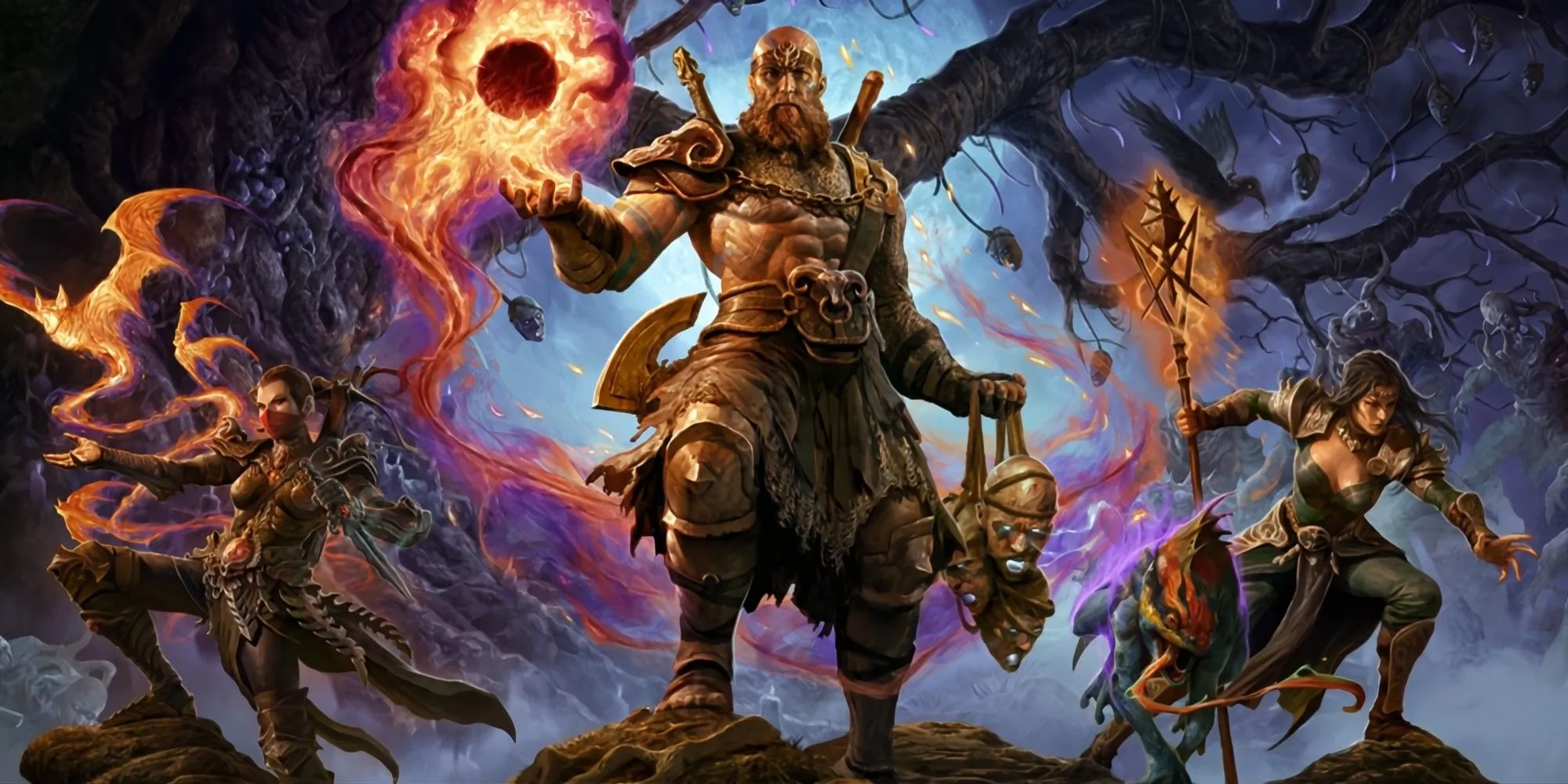
As I logged into Diablo 4's Season of Witchcraft back in January, the anticipation was palpable. The new seasonal mechanic, Witchcraft Powers, promised to inject fresh life into the game, offering a system reminiscent of the beloved Vampiric Powers from Season of Blood. We could equip up to six of these powers, each promising to reshape our builds and playstyles. The community buzzed with excitement, theorycrafting optimal combinations and planning our ascent through the newly challenging content. Little did we know that two particular powers would soon become the center of a storm, their overwhelming strength causing Blizzard to take swift and decisive action.
The Dawn of Unintended Chaos
The trouble began subtly. Twilight Warding and Decay Augmentation, two Witchcraft Powers, weren't just powerful; they were game-breaking. What was intended as a boost to player agency quickly mutated into an imbalance as vast as the Fractured Peaks themselves. The Decay Augmentation power, in particular, became infamous. Once equipped, it allowed certain builds—especially those wielded by Spiritborn players—to deal damage numbers so astronomical they seemed like a cosmic joke. Clearing the formidable Pit Tier 150, a challenge designed to test the limits of even the most seasoned Nephalem, became as effortless as swatting a fly. The power disparity between classes using these powers and those without was not a gap but a chasm, turning the competitive landscape into a lopsided affair.
Blizzard's response was surprisingly swift. They released a statement on their official forums, a digital decree that echoed through Sanctuary. The two offending powers were to be disabled immediately while the development team worked on a solution. The announcement was a mix of reassurance and caution: the powers were still technically purchasable in-game, but players were strongly advised against buying them until the fix was deployed. It was a strange limbo—seeing the tools of ultimate power dangle just out of reach, like forbidden fruit on a tree guarded by celestial developers.
The Ripple Effect: More Than Just Witchcraft
The disabling of the Witchcraft Powers was just the tip of the iceberg. As the community dug deeper, other longstanding issues resurfaced, proving that the game's ecosystem was more interconnected than it appeared. It was like discovering that a single cracked foundation stone was threatening the entire cathedral.
-
Necromancers' Lament: Players specializing in commanding the undead hordes reported persistent issues with the Ring of Mendeln. Its interactions with minion builds were inconsistent, breaking the delicate synergy that summoner builds rely on. A fix was promised for the subsequent update, 2.1.2.
-
Barbarians' Unstable Fury: For the warriors of Mount Arreat, the Mantle of Mountain's Fury continued to be a source of frustration. Despite a "fix" in a previous patch, its numbers remained erratic and unpredictable. This inconsistency meant another adjustment was scheduled for a future season, leaving Barbarians to grapple with an unreliable cornerstone of their power.
These class-specific bugs highlighted a recurring theme in the live-service journey of Diablo 4: the constant, delicate dance of balancing. Tweaking one aspect could inadvertently expose weaknesses in another, a process as intricate as calibrating a clock made of shadows.
A Community's Patience and a Developer's Pivot
As a dedicated player, I've grown accustomed to the rhythm of patches and hotfixes. Bugs and overpowered builds are, in a strange way, part of the Diablo 4 experience. However, the situation with the Witchcraft Powers felt different. The speed of Blizzard's intervention was notable. Instead of letting the meta solidify around these broken powers for weeks, they acted within days, pulling them from the game entirely. This proactive approach was a welcome change, a sign that the developers were watching the game's health as closely as the most hardcore players.
The promised resolution was a hotfix slated for the following week, though the developers cautiously noted that if complexities arose, a full client patch might follow the release of version 2.1.1. This transparency, while acknowledging uncertainty, was better than silence. It created a sense of shared purpose—we were all waiting for Sanctuary to be restored to balance.
Reflections from the Frontlines
Looking back from 2026, the Season of Witchcraft's turbulent start serves as a fascinating case study. The Witchcraft Powers system itself was a brilliant idea, a new layer of customization that sparked immense creativity. The problem wasn't the concept but the execution of two specific nodes within it. The episode demonstrated several key aspects of modern game development:
-
The Scale of Testing: No internal testing can perfectly replicate the chaotic, inventive environment of millions of players. A power that seems strong in a controlled setting can become a universe-breaking anomaly in the wild.
-
The Importance of Agility: Blizzard's rapid response set a new benchmark. It showed a willingness to prioritize game integrity over sticking rigidly to a patch schedule, a lesson that has influenced their approach in subsequent seasons.
-
The Fragile Ecosystem: A game like Diablo 4 is a complex web of systems—skills, items, seasonal mechanics, and class synergies. Adjusting one thread can make the whole web vibrate with unintended consequences.
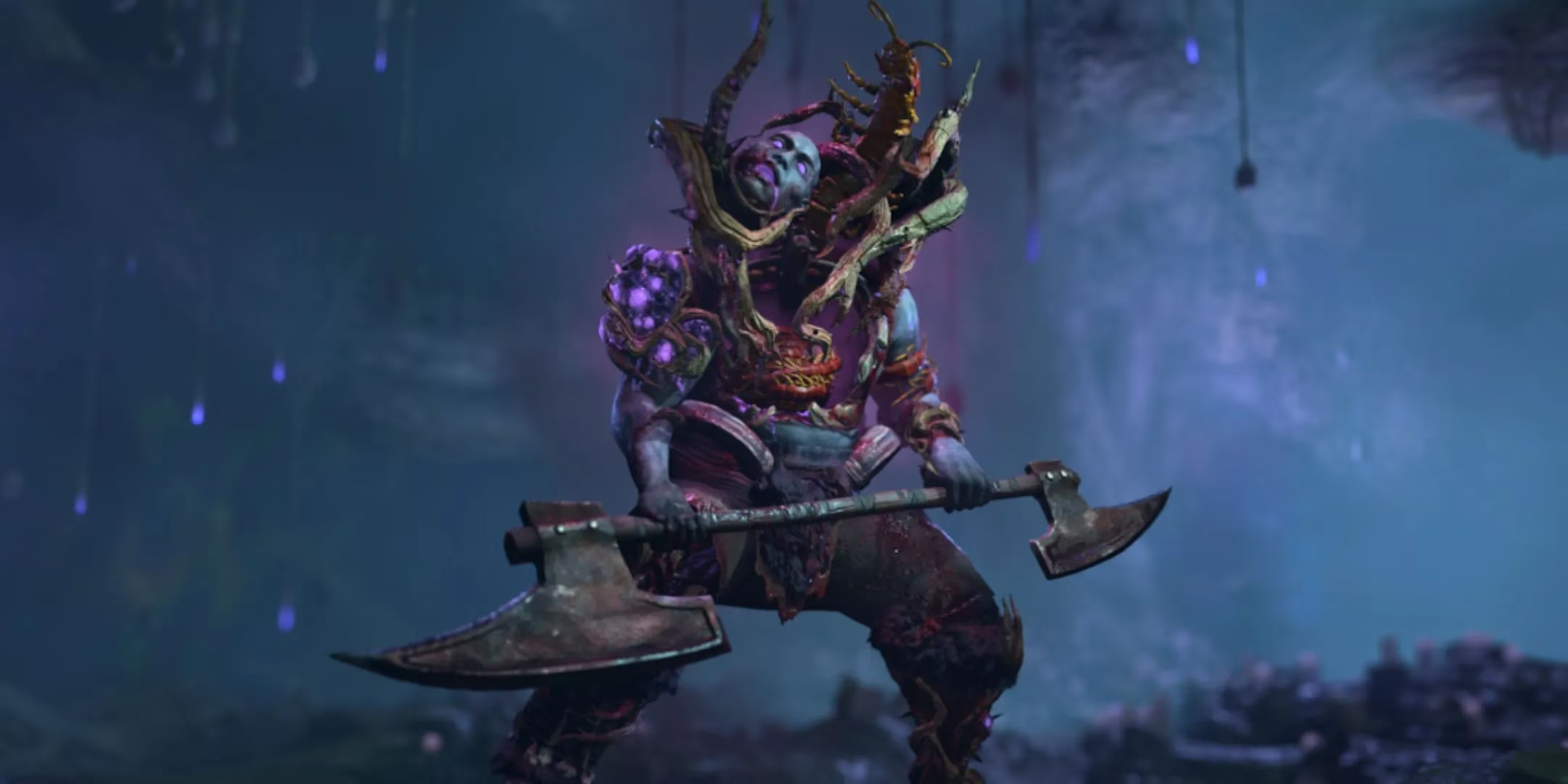
The temporary removal of Twilight Warding and Decay Augmentation was a necessary pruning. It was like a gardener cutting back a rose bush that had grown too wild, threatening to overtake the entire garden. While inconvenient for those who had planned their entire season around them, it preserved the competitive and cooperative spirit of the game. It ensured that the Season of Witchcraft would be remembered for its inventive mechanics and challenging new bosses like the Headrotten, not just for a week of chaotic, trillion-damage exploits. In the endless war against the forces of Hell, it seems, balance is the hardest boss of all to conquer.