Let me tell you, hitting that max level in Diablo 4 is just the beginning of the real journey, the true grind. As someone who's spent countless hours deep in Sanctuary, I can say with certainty that understanding and mastering Glyphs is what separates the casual players from the absolute beasts who dominate the endgame. These aren't just minor stat boosts; they're the cornerstone of the Paragon system and your ticket to scaling into the brutal Torment difficulties. If you want to min-max your character and truly feel that power fantasy, you gotta get this system down pat. It's not just about having Glyphs; it's about leveling them smartly and placing them strategically. Trust me, once you get the hang of it, the feeling of crushing high-tier content is absolutely chef's kiss.
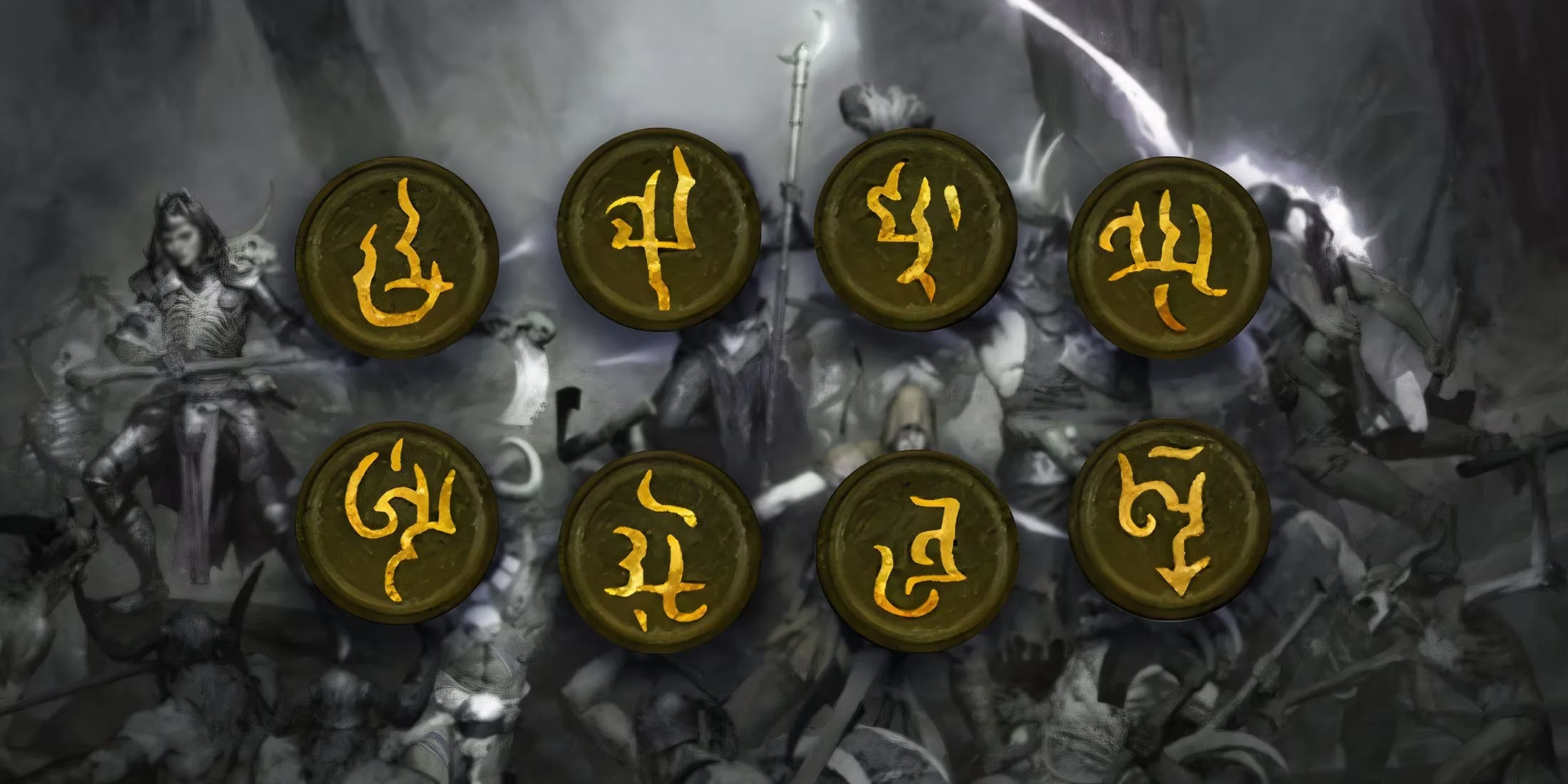
Now, here's the deal on how to actually level these bad boys up. Forget the old ways—the meta has evolved. As of the Vessel of Hatred expansion, the exclusive method for leveling Glyphs is by conquering the Pit of the Artificer. This is the new endgame loop, folks. Every successful run grants you three precious attempts to upgrade your Glyphs. And here's a pro-tip: if you manage to clear the Pit without dying—a flawless run—you're rewarded with an extra attempt. That's four chances to power up! This is a significant shift from the previous system where we grinded Nightmare Dungeons for Glyph XP. The Pit is now the name of the game, and it's a total game-changer that demands both speed and survivability.
Why is speed so crucial? It's simple math, really. Glyph leveling is directly tied to your clears. The faster you blast through a Pit run, the quicker you can jump back in and earn more upgrade attempts. This creates a beautiful, powerful feedback loop: stronger Glyphs make you faster, which lets you level Glyphs faster. It's the ultimate endgame power spiral. This is why everyone is constantly tweaking their Diablo 4 builds—to shave off those precious seconds. You're not just building for damage; you're building for efficiency. Every second saved is progress accelerated.
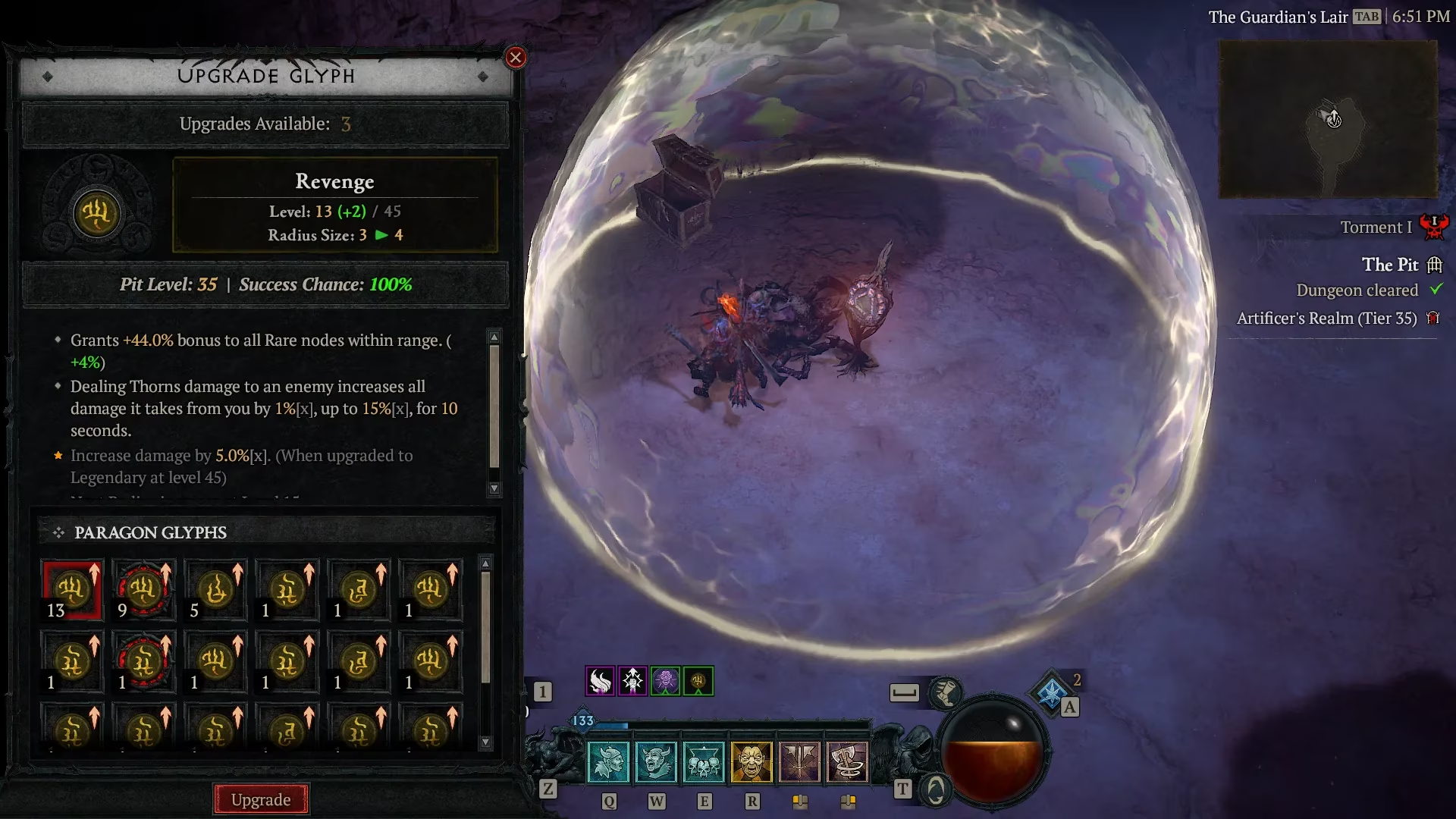
But wait, there's a genius-level strategy here that many players overlook. Let's talk about power-leveling low-level Glyphs. If your character is a powerhouse capable of clearing high-tier Pit runs, you can use that power to skyrocket your new or under-leveled Glyphs. The rule is this: for every 20 levels of difference between your Glyph's level and the tier of the Pit run you complete, the Glyph gains one additional level per successful upgrade. Let me break it down:
-
Example 1: You upgrade a level 1 Glyph after a level 30 Pit run. The difference is 29 levels, which is more than 20 but less than 40. Result? Each successful upgrade gives it +2 levels.
-
Example 2: You upgrade that same level 1 Glyph after a level 40 Pit run. The difference is 39 levels. Result? Each successful upgrade now gives it a whopping +3 levels.
This is a game-changer for quickly bringing new Glyphs for alternate builds up to par. It rewards your main character's progression and makes experimenting with new setups far less painful. No more dragging a level 1 Glyph through low-tier content!
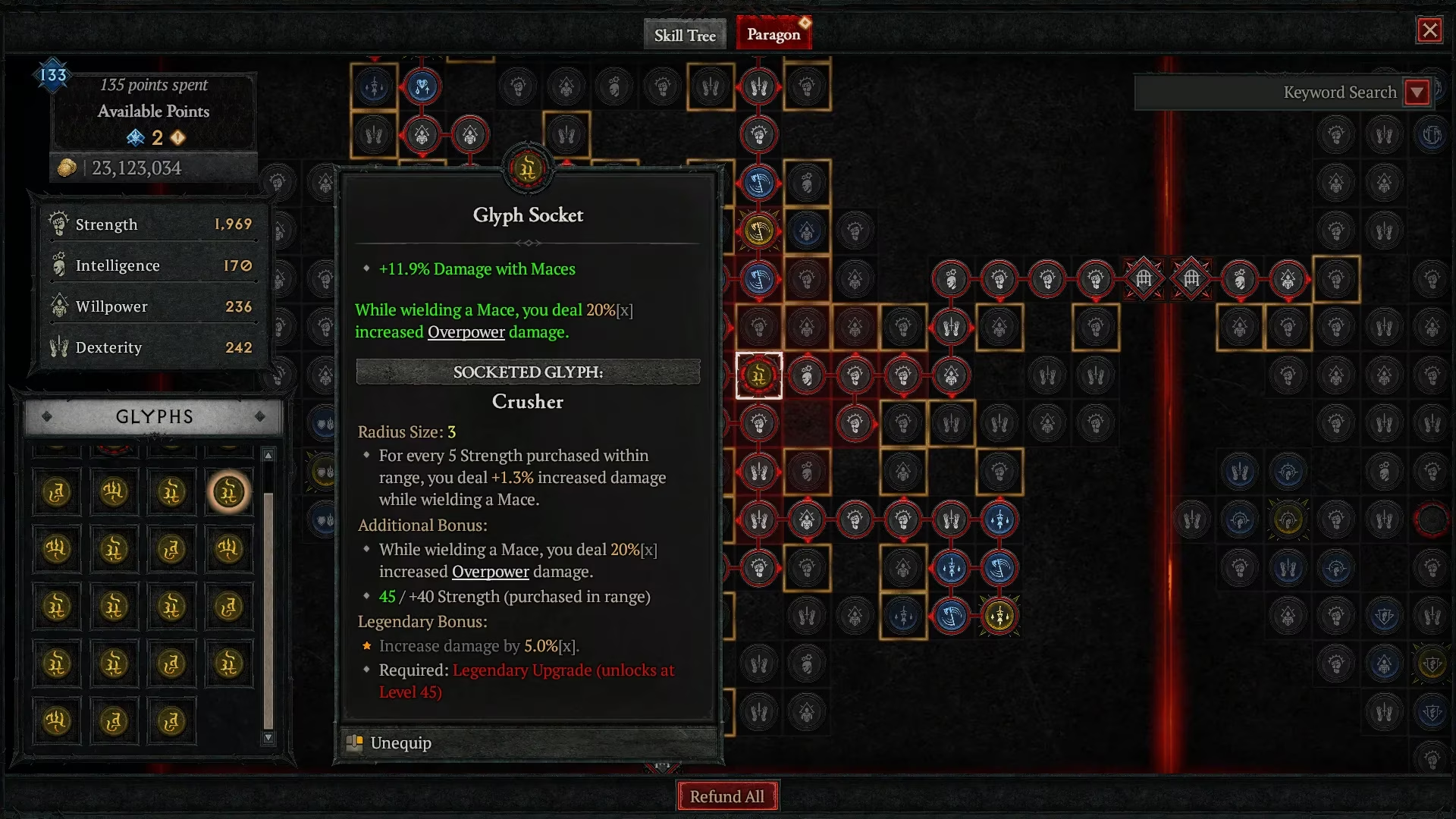
Now, having a max-level Glyph is only half the battle. The other half—and honestly, the more cerebral and satisfying part—is placement. Glyphs are inserted into sockets on your sprawling Paragon Board. Every single Glyph comes with a dual-layered bonus system:
-
Primary Bonus: This is the core effect, and it usually scales in power based on how many nodes of a specific stat (like Strength, Intelligence, etc.) are within the Glyph's circular range on the board.
-
Additional Bonus: This is a conditional, often powerful effect that unlocks only if you have a required number of a specific stat's nodes within the Glyph's range.
Let me give you a concrete example from my Sorcerer's playbook. The Tactician Glyph provides:
-
Primary Bonus: A sweet percentage damage increase to all your Rare nodes on the board.
-
Additional Bonus (Requirement: 25 Dexterity nodes in range): After you cast a Defensive skill, you deal bonus damage for a short duration. This synergy can be insane for certain builds.
The key takeaway? You can't just plop a Glyph into any socket. You have to be a strategist. You need to find a socket on a board that is already densely populated with the stat your Glyph needs to activate and scale its bonuses. It's like solving a puzzle where the reward is massive power.
And here's the final piece of the puzzle: Glyph Range Expansion. Leveling a Glyph isn't just about making its numbers bigger. At two critical breakpoints—levels 15 and 45—the Glyph's radius of influence on the board expands. This is huge! A larger radius means it can encompass more stat nodes, making it easier to hit those bonus requirements and making the Glyph viable in more areas of your Paragon Board. Planning your pathing to maximize nodes within these expanding circles is a top-tier endgame activity.
To wrap it all up, mastering Glyphs in 2026's Diablo 4 is a three-part symphony:
-
The Grind: Efficiently farm the Pit of the Artificer for upgrade attempts.
-
The Strategy: Use high-tier Pits to power-level new Glyphs and optimize your clear speed.
-
The Craftsmanship: Strategically place Glyphs on your Paragon Board to satisfy stat requirements and leverage range expansions.
It's a deep, rewarding system that turns your character from a mere hero into a legend of Sanctuary. Get out there, conquer those Pits, and watch your power level go absolutely through the roof. Happy hunting! 😈