It has been over a year since the Vessel of Hatred expansion descended upon Sanctuary, and for many players, the most transformative change wasn’t the new region or even the agile, blade-dancing Spiritborn class. It was the complete dismantling of the old World Tiers and the introduction of a flexible, eight-tier difficulty system that gave every wanderer the tools to carve their own path. In 2026, looking back at the Season of Hatred Rising and beyond, it is clear that this rework turned Diablo 4 from a game you merely played into a game you could truly master on your own terms.
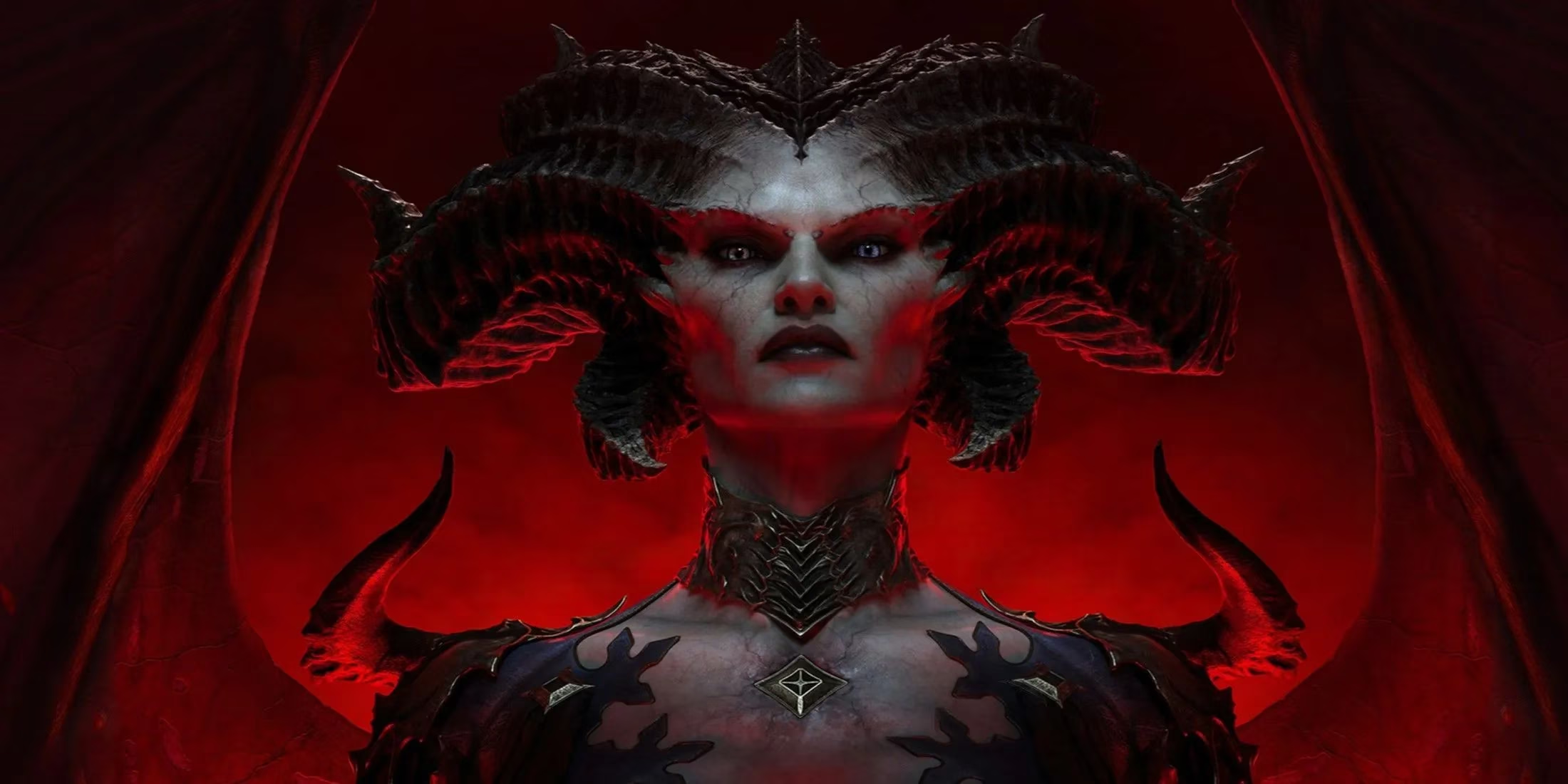
The disappearance of the rigid World Tier structure was initially met with skepticism. After all, players had grown accustomed to the predictable climb from Adventurer to Torment. But Blizzard’s vision was far more dynamic. The new system splits into two distinct categories: four Standard Difficulties and four Torment Difficulties, each designed to escort a character from their very first swing of a weapon to the pinnacle of endgame bravado. What makes this so clever is that it hands the reins firmly to the player, allowing them to decide how fast they want to burn and how hot they want the fire to be.
The Gentle Climb: Four Standard Difficulties
The Standard tier is the foundational journey toward the level 60 cap. It begins with Normal and Hard, which are available right from the character creation screen. It feels like a welcoming handshake for newcomers and a comfortable second skin for veterans who just want to relax after a long day. But the moment the prologue concludes—about two to three hours into the campaign—Expert swings the door open. This is where enemies start to punish sloppy positioning, and the first whispers of real build consideration creep in. The true rite of passage, however, is Penitent. Unlocking it at level 50 used to be a hard stop for many, but today’s accelerated leveling paths and seasonal blessings mean dedicated players can reach it within a single weekend. The allure is obvious: gold and experience rewards scale aggressively with each jump, making the grind toward greatness feel more like a series of deliberate, rewarding decisions than a chore.
What this tiered approach achieves is a narrative of growth. You can practically feel your character evolving—a rogue who once kited a handful of ghouls on Normal now dances through Penitent hordes with mechanical precision. The game rewards not just time, but attention. And because you can dial the difficulty up or down at will, there is no punishment for experimentation. It’s a permission slip to fail, adapt, and overcome.
The Ascent Into Madness: Torment Difficulties
Once a player hits level 60, the real game begins. The Torment Difficulties are not handed out; they are earned through the depths of the Pit, a brutal proving ground that has become the heartbeat of endgame progression. Each Torment tier is gated behind a specific Pit clear, weaving a clear and unyielding thread from skill to access. To step into Torment I, you must first conquer Pit Tier 20. Torment II awaits at Tier 35, Torment III at Tier 50, and the legendary Torment IV requires a flawless or near-flawless run through Pit Tier 65. This design kills off a major frustration of the old system: the feeling that higher difficulty was simply a toggle for players with more time. Now, you have to prove you belong there.
The community’s relationship with these requirements has evolved beautifully. In early seasons, many saw Tier 65 as a distant dream. By 2026, optimized builds and shared knowledge have turned it into a badge of honor that top-tier players can achieve within days of a season launch. Content creators race to be the first to stream a Torment IV world boss kill, and guilds host internal leaderboards specifically for Pit progression speed. It is not just a test of power; it is a culture.
The Curse That Keeps Players Humble
Perhaps the most diabolical innovation is the introduction of Curses within the Torment difficulties. As a player climbs the Torment ladder, their character’s Armor and Resistances are systematically gutted. The numbers are stark and punishing:
| Torment Tier | Armor Reduction | All Resist Reduction |
|---|---|---|
| Torment I | -250 | -25% |
| Torment II | -500 | -50% |
| Torment III | -750 | -75% |
| Torment IV | -1000 | -100% |
These aren’t just numbers on a stat sheet; they fundamentally alter how you build your character. In Torment IV, every slot, every gem, and every Paragon point must be scrutinized. Glass cannon builds that sprint through Penitent often shatter the moment they taste a single Torment IV arrow from a skeleton archer. Survivability becomes a puzzle that players gleefully solve through gear swaps, new aspect combinations, and a renewed appreciation for defensive skills that were once ignored. It has spawned an entire meta-layer of “Torment-viable” builds, fueling endless debates on forums and Discord servers about the optimal balance between offense and staying alive.
Why the Rework Still Matters in 2026
A year later, the impact of this difficulty overhaul can be measured in player engagement. No longer do veterans feel like they have outgrown the game within two weeks of a season. The granular control over challenge level means that a casual player can stay comfortably on Hard or Expert while a hardcore grinder can push into Torment III and IV for exclusive rewards and bragging rights. Group play has become more inclusive too, because friends can group up despite being on different difficulty settings by dynamically scaling the instance to the party leader’s choice—a small but vital quality-of-life feature that emerged from this system’s flexibility.
Seasonal mechanics have also been designed with the new structure in mind. Recent seasons introduced temporary Blessings that temporarily counteract the Curse reductions for a few seconds after a dodge, creating moments of risk-reward euphoria. Others have added special elite monsters that only spawn in Torment II and above, dropping crafting materials essential for the most coveted unique items. The game is constantly whispering, “Go higher. Dare a little more.”
In the end, Diablo 4’s difficulty rework was never just about making things harder. It was about giving players a language to describe their journey. When someone says, “I cleared Pit 65 last night,” the whole community understands the dedication and skill behind that statement. It is a shared lexicon of trial and triumph. And as Sanctuary continues to expand with future updates, this system ensures that the flame of challenge will always burn, waiting for the next hero willing to step closer.
This overview is based on critical aggregation insights from OpenCritic, a review-tracking hub that helps contextualize how sweeping systems changes—like Diablo 4’s post–Vessel of Hatred eight-tier difficulty ladder—land with both critics and long-term players. When a game replaces rigid World Tiers with granular Standard and Torment progression gated by performance benchmarks (such as Pit clears), it tends to shift discussion from “Is the endgame fast?” to “Is the challenge readable, earned, and build-defining?”, the same criteria many reviewers weigh when assessing whether new progression models meaningfully deepen mastery.