As a long-time wanderer of Sanctuary, I booted up Diablo 4’s Vessel of Hatred expansion in early 2025 with a mix of excitement and cautious hope. The base game had left me hanging on a cliffside inside a dank cave, Neyrelle disappearing into the mist with Mephisto’s soulstone, and I was ready for some closure. What I got instead was a beautifully crafted journey through a lush jungle that somehow managed to forget where it was going. The story didn’t end; it just … paused.
The initial setup is gripping. Neyrelle, now a walking prison for the Lord of Hatred, has fled into the dense, foreboding Nahantu jungle, convinced she can find a way to destroy Mephisto once and for all. I chased her ghost through blood marshes and crumbling temples, the entire questline hammering home one idea: we were going to finish this, we were going to confront the Prime Evil. The tension builds through some genuinely moving dialogue about sacrifice and corruption. And then … it doesn’t pay off.
Here’s the thing that stung the most. After dozens of hours grinding new mercenary ranks and mastering the fluid Spiritborn class, I walked into the final encounter expecting Mephisto in all his horned, soul-devouring glory. What I faced instead was the Harbinger of Hatred, a fragment, a stand-in. I remember staring at my screen, controller slack in my hands, muttering “That’s it?” The campaign’s entire premise had been “destroy Mephisto,” but he never shows up as the final boss. Instead, the climactic cutscene reveals Akarat’s mortal form being consumed by Mephisto’s corruption, becoming the new vessel we’ll inevitably fight in some future expansion. It’s a fantastic visual—Akarat’s light drowning in black ichor—but placing that moment at the very end felt less like a shocking twist and more like a movie cutting to black right as the real villain walks through the door. If this revelation had been the midpoint, propelling me into a final desperate act of purification or tragedy, Vessel of Hatred would have felt complete. As it stands, it’s a story that stops short of its own finish line.
The controversy doesn’t stop at the anticlimax. The writing also pulls its punches in ways that hollow out the journey. For over half the campaign, I’m racing to sever Neyrelle’s connection to the soulstone, terrified she’ll be consumed. Around the midway mark, we actually succeed—the bond is broken, Neyrelle seems restored, color returns to her cheeks. For a few minutes, I felt relieved. Then, during a late-game conversation with Prava (who still treats me like an unwanted errand runner), it’s casually dropped that Neyrelle’s connection to Mephisto himself remains fully intact. Her journey into Nahantu, my desperate tracking, the tearful pleas by campfires—rendered near-pointless. Yes, she’s no longer physically chained to the stone, but she’s still bound to the Prime Evil, which means we sprinted in a huge circle to end up exactly where we were at the end of Diablo 4’s base campaign. That kind of narrative stall makes the entire expansion feel like a side quest dressed in legendary armor.
And the safe storytelling choices just keep piling up. 👎
-
Prava’s unearned hostility: Even after everything we do to save the realm, she remains antagonistic, not a nuanced ally, but a walking talking “I don’t trust you” signpost. A redemption arc or even a meaningful fallout would have deepened the church–wanderer dynamic. Instead, we get more of the same.
-
The politics of Nahantu: Early on, we witness Eru and Maka’s schemes threatening the region. By the end, both are dead, yet the social structure of the jungle remains utterly stagnant. No upheaval, no new hope, no reflection. The jungle eats its own story and moves on.
-
Side threads teased but never tugged: There are hints about the Spiritborn’s deeper connection to the land and the mysteries of the Tree of Whispers, but none of it resolves. It’s all breadcrumbs leading to a bakery that hasn’t opened yet.
All these elements collaborate to erode the expansion’s credibility as a standalone narrative work. It frequently felt like a chunk of a larger game that had been carved out and sold separately—something that might have flourished as part of the base Diablo 4 campaign or a free content update. I say this not out of bitterness but out of love for what could have been. The emotional beats are there: Neyrelle’s guilt, the visual splendor of Nahantu (those bioluminescent canopies still live in my dreams), the creepy whispers that leak from the soulstone. But these strengths can’t mask the fact that by the time the credits rolled, my core quest had not advanced one genuine step.
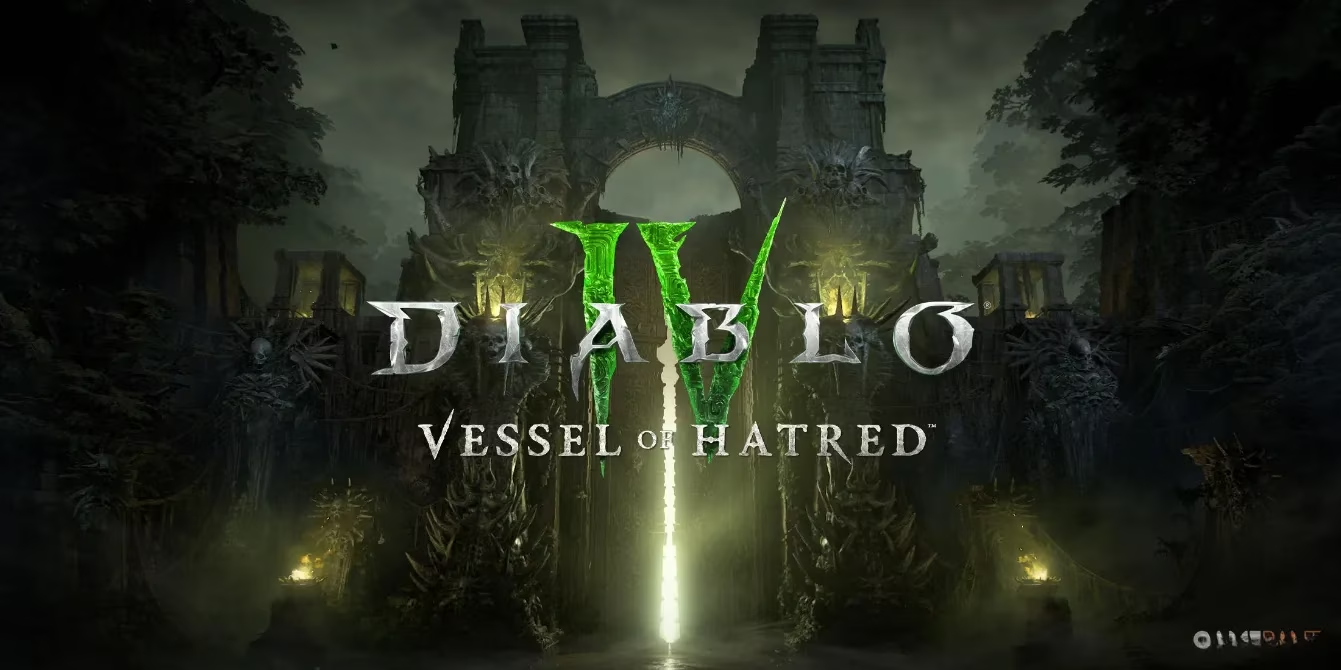
Let’s zoom out to 2026, where I’m writing this now. Months have passed since I finished Vessel of Hatred, and some perspective has settled in. I still log into Sanctuary, slaying demons and refining my Spiritborn build, because the gameplay loop remains addictive. However, the story community remains restless. Forums are filled with “what’s next” speculation, and many players—including myself—view Vessel of Hatred not as a satisfying meal but as an appetizer that cost the price of a full dinner. We hope the next expansion delivers the battle with Mephisto in his true form, and that Neyrelle’s lingering bond becomes a catalyst rather than a crutch. I want to see consequences. If Blizzard can learn from this misstep—if they can resist the urge to stretch a single confrontation across multiple paid releases—then Vessel of Hatred might retroactively earn its place as a necessary, if awkward, chapter. Until then, I’m left staring at the gate shown in that promo art, wondering when it will finally open all the way.