The moment the barge drifted through the mist-choked river into Nahantu, every seasoned wanderer knew Sanctuary had changed. In 2026, newcomers still experience that same lure, stepping into Act VII of Diablo 4’s Vessel of Hatred expansion as if uncorking a bottle of aged wine—rich, intoxicating, and meant to be savored, not gulped. The question on their lips, however, rarely differs: how many sunsets will vanish behind the screen before the credits roll? For those who fix their gaze solely upon the main thread, the answer unfolds in roughly twelve hours.
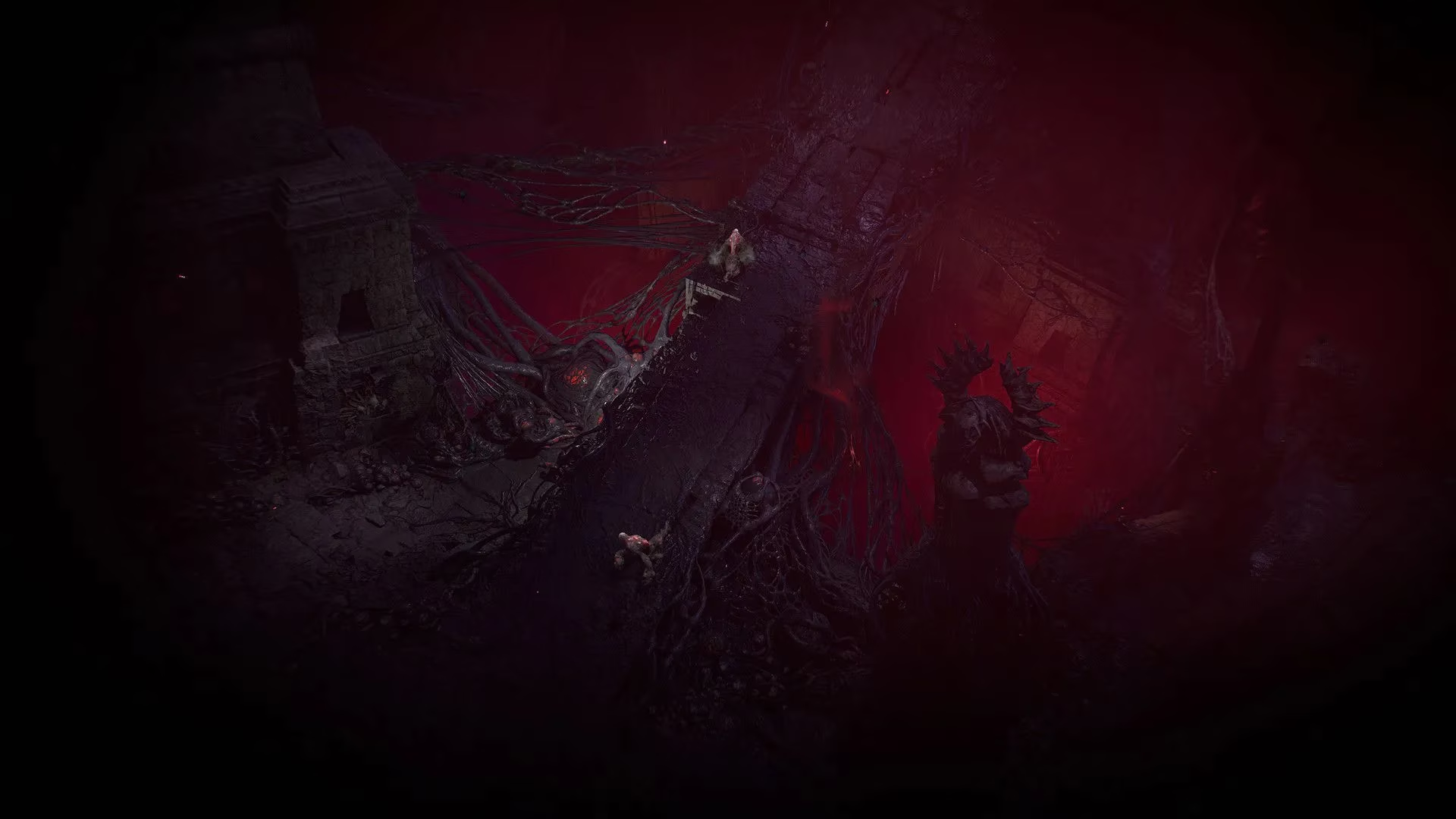
Twelve hours is a strange unit. It feels like a single rain-soaked evening for a nephalem of old, yet compared to the base game’s sprawling twenty-five-hour odyssey, the Vessel of Hatred campaign is a tightly coiled serpent—half the length, but with venom concentrated twice as potent. One player, who simply calls herself Mara, treated the expansion like a pilgrimage. She ignored every side whispering, every ornate door that hinted at a dungeon, every golden glint of a Tenet of Akarat. Her only compass was the main quest marker, a crimson lodestar pulling her from one betrayal to the next. By the time she stared into the eyes of the final boss, her clock read just over eleven hours and forty minutes. The narrative had not overstayed its welcome; it had simply concluded with the precision of a master blacksmith’s hammer—each beat deliberate, no wasted motion.
Yet to measure Vessel of Hatred solely by its spine is to catalogue a library by its cover. Nahantu is a tapestry woven with thirty-five side quests, and each thread pulls away from the main weave to reveal a darker, more intimate corner of the jungle. These are not filler; they are the whispers of a world still bleeding from Mephisto’s corruption. Mara, after her initial sprint, returned with a different mindset. She let herself become a leaf on a current, drifting toward any plea for help. The result was a playthrough that stretched beyond expectation—eighteen hours, then twenty, then more. The side quests acted like a slow-acting sedative, lulling the player into a deeper, more immersive rhythm, where every rescued soul and every uncovered secret became a tiny lantern in the oppressive gloom.
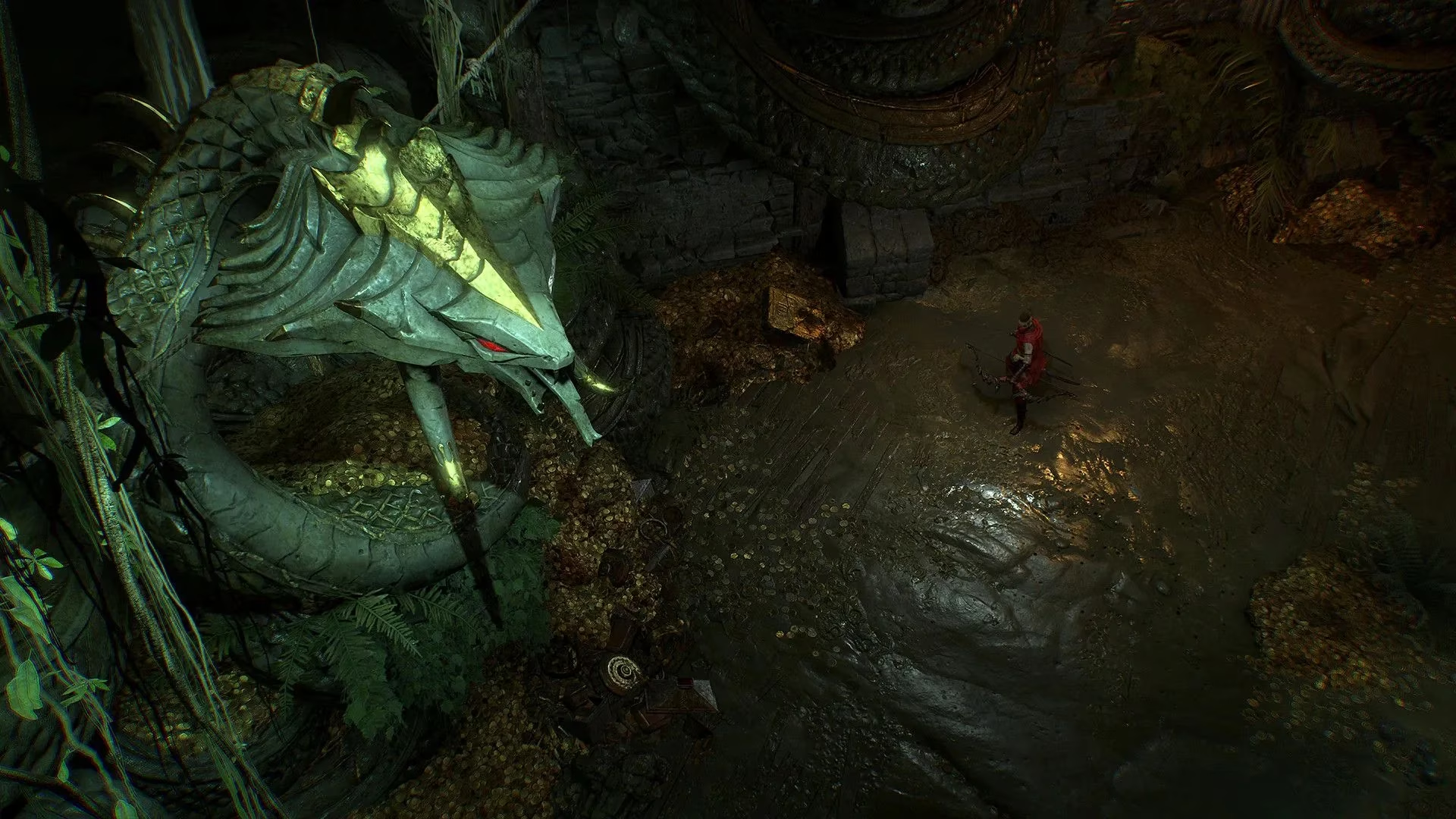
Scattered among the quests are twenty dungeons, each a sealed tomb waiting to be cracked open like a pomegranate stuffed with loot and lore. For completionists, these add a layer of predictability—repeatable chambers where monster density spikes and boss mechanics punish the careless. Then there are the thirty Tenets of Akarat, the spiritual successors to the Altars of Lilith. Hunting them becomes a maddening dance of backtracking and cliffside scrutiny. One player spent an entire afternoon circling a waterfall, convinced a stat-boosting relic hid behind the cascade. He was right, but the validation came at the price of four hours. That is the Vessel of Hatred’s quiet pact: optional content can double, even triple, the time investment without a peep of protest from the player. It’s a heist where the victim hands over the keys willingly.
A fresh temptation arrives at the campaign’s midpoint: the Undercity. This timed dungeon materializes like a gauntlet thrown into a silent hall. Suddenly, the leisurely stroll through Nahantu transforms into a frantic race against a clock, with targeted rewards glistening at the finish line. Players often describe the Undercity as a crackling engine that refuses to idle. You enter seeking a specific pair of gloves, and four runs later you emerge bleary-eyed, clutching not the gloves but five other upgrades you never knew you needed. The hours stack like plates in a busy tavern, each run a new order that must be fulfilled immediately.
For those who crave the fellowship of demonslaying, the Dark Citadel looms beyond the credits. This co-op dungeon demands two allies at minimum, though four is the whispered ideal. Here, the game mutates from a solo cantaloupe to a shared banquet; tactics must be coordinated, roles assigned, and every weekly reset brings a fresh harvest of rewards. A dedicated group can easily bleed dozens of hours into perfecting their strats, their bonds forged in the fires of repeated wipes and glorious victories. The Citadel is not a content island—it’s the expansion’s heartbeat for the endgame faithful, a place where the twelve-hour story becomes a distant memory.
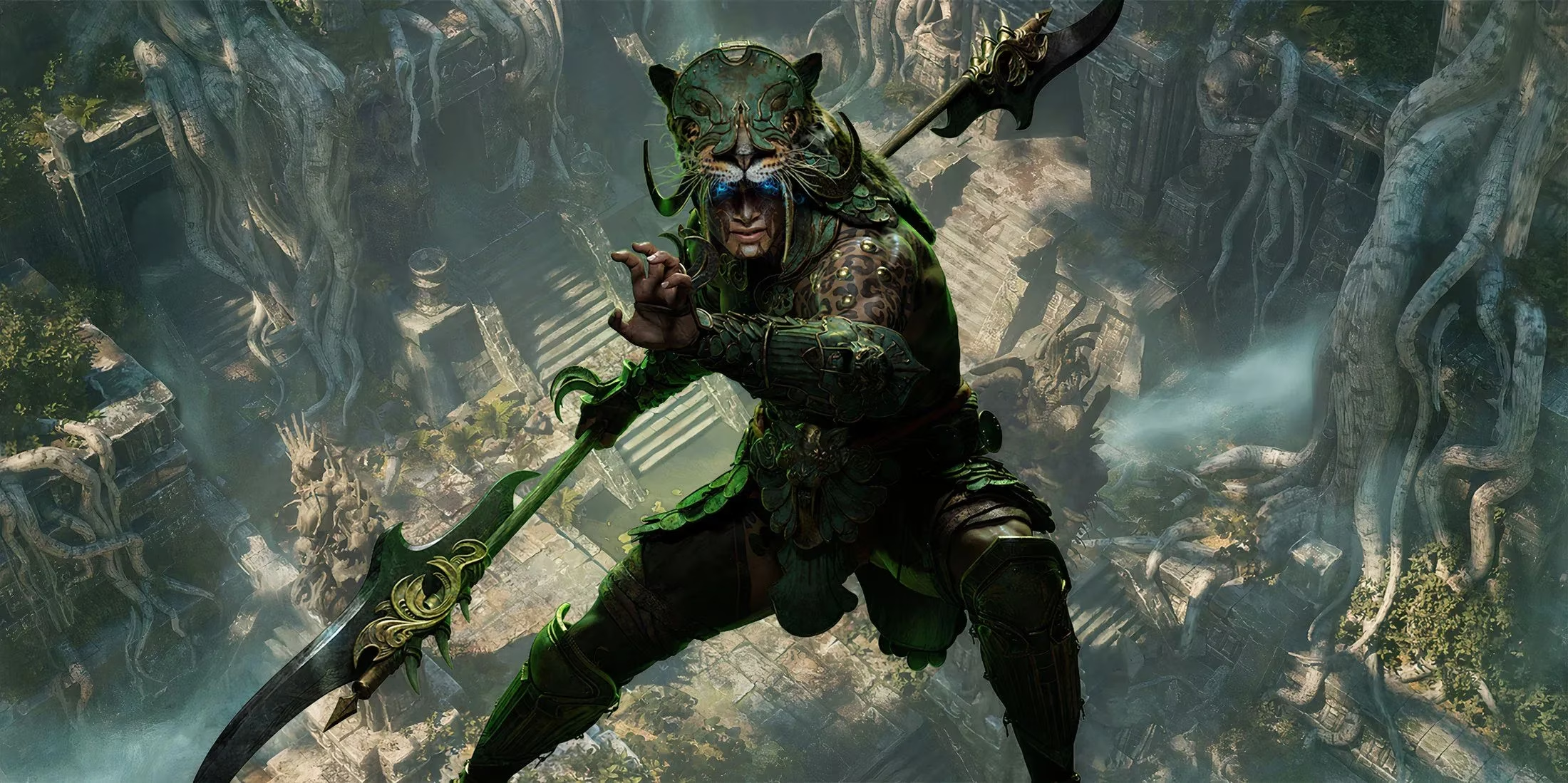
By 2026, the Vessel of Hatred has settled into a comfortable niche among action RPG expansions. Those who race through its campaign emerge in roughly a dozen hours, slightly breathless but satisfied. Those who let Nahantu’s tendrils snare them, however, find themselves lost for thirty, forty, even fifty hours—a testament to a world built with surprising density. The main quest is the lightning bolt, sharp and fleeting; the side content is the thunder that rolls on, shaking every corner of the jungle. And somewhere in between, in the timed chaos of the Undercity or the orchestrated camaraderie of the Dark Citadel, every player carves out a personal length that no guide can truly predict.